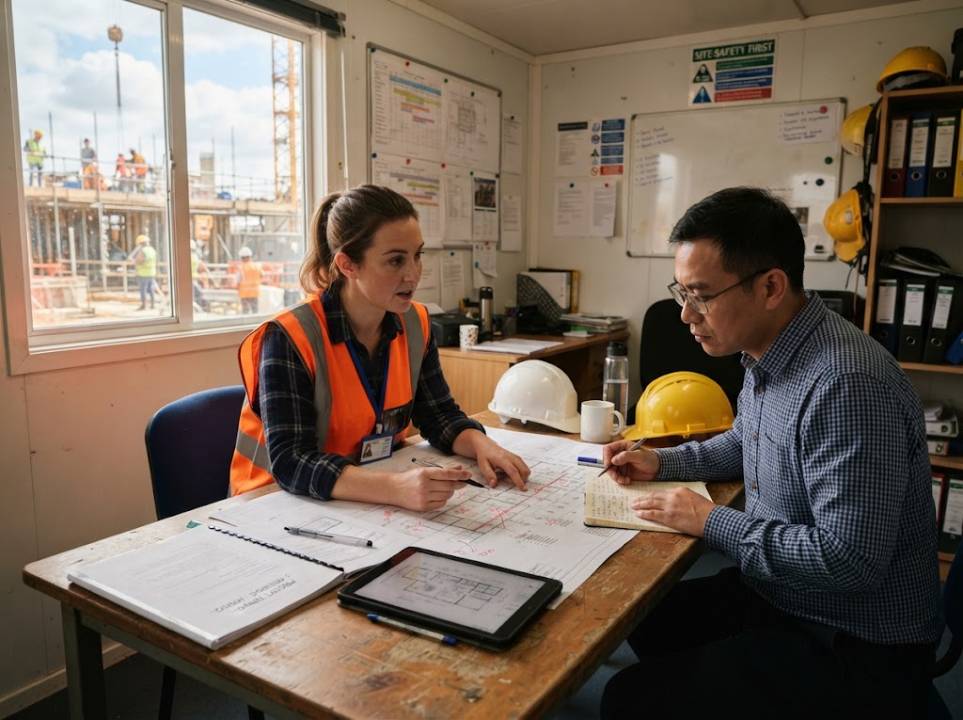
Ukrainian businesses rebuilding supply chains, and the foreign companies partnering with them, are moving fast on contracts, certifications, and grant applications. Speed matters, but so does getting the wording right on documents that regulators, banks, and customs officials will scrutinize line by line.
Reconstruction Runs on Paperwork
Infrastructure grants, insurance claims, and cross-border shipping contracts all move through several languages before a project breaks ground. A construction firm bidding on a rebuilding contract in Kharkiv or Odesa needs technical specifications translated with the same precision an engineer would expect in the original language. A missing decimal point or a mistranslated unit of measurement is not a minor slip when it appears in a structural drawing.
Russian Still Shows Up in Regional Business
Despite the political shift away from Russian in public life, plenty of older contracts, technical manuals, and supplier records were originally drafted in Russian and still need to be worked with. Companies auditing legacy documentation for compliance purposes still need accurate translation english to russian and back again, particularly when reconciling historic supply agreements or verifying equipment specifications that predate the war.
Certified Documents for People, Not Just Contracts
Birth certificates, marriage records, diplomas, and court documents for Ukrainians relocating abroad usually require sworn or notarized translation, not a quick bilingual read-through. Agencies offering certified translation services uk report a steady flow of resettlement paperwork, university applications, and family reunification cases that hinge on a translator's stamp being accepted by a specific government office. Getting the certification format wrong means resubmitting weeks later.
Where Software Earns Its Keep
Large reconstruction projects generate the same terms across hundreds of documents: safety codes, material names, contractor titles. Translators handling this volume rely on computer-assisted tools to catch inconsistencies before a client does. Anyone asking what is a cat tool in this context is really asking how a translation team keeps a thousand-page tender document consistent from the first page to the last, and the answer is software that flags repeated terms and enforces one approved translation per concept across the whole file set.
Banks and Insurers Move at a Different Pace
Financial institutions underwriting reconstruction loans or insuring rebuilt facilities apply a level of document scrutiny that construction teams sometimes underestimate. A loan covenant translated loosely, or an insurance exclusion clause rendered ambiguously, can surface as a dispute years later when a claim is filed. Lenders increasingly ask for a certified translation memory alongside the documents themselves, so that any future amendment uses consistent terminology rather than drifting from the original agreement.
Grant Applications Reward Precision
International donors and development agencies funding reconstruction work typically require applications and progress reports in their own working language, often English or French, regardless of where the project is based. Organizations that treat these submissions as a formality rather than a technical document tend to see funding delayed over clarification requests. A well-translated budget narrative that matches line items exactly to the original Ukrainian accounting terms moves through review far faster than one that paraphrases loosely.
Measuring the Real Cost of Getting It Wrong
Industry researchers such as CSA Research have long tracked how translation quality affects business outcomes, and their findings consistently show that cutting corners on language services costs more in rework, delayed approvals, and damaged trust than budgeting properly from the outset. For reconstruction work specifically, a rejected permit application or a stalled grant disbursement can push an entire project timeline back by months.
The businesses navigating Ukraine's recovery most successfully are the ones treating translation as infrastructure in its own right, not an afterthought bolted onto the end of a project. Documents move faster, disputes surface less often, and the paperwork keeps pace with the physical rebuilding it is meant to support.
Building a Long-Term Language Strategy
Companies planning to stay involved in Ukraine's recovery for years, not just for a single project cycle, are starting to formalize their approach to translation the same way they would formalize procurement or safety procedures. That means maintaining an approved glossary of technical and legal terms, designating a single point of contact for certification questions, and reviewing translated templates annually as regulations shift. Firms that treat this as a one-off task tend to relearn the same lessons on every new contract, while those with a documented process onboard new projects noticeably faster.
Local Partners Make the Difference
Foreign companies that pair with a Ukrainian legal or accounting partner, rather than relying solely on translation from abroad, often catch regional terminology and formatting expectations that a general translator might miss. Local partners know which government offices are strict about certification stamps and which accept digital signatures, knowledge that saves weeks when a deadline is tight. Combining that local insight with professional translation services, rather than choosing one over the other, tends to produce documents that clear review on the first submission.