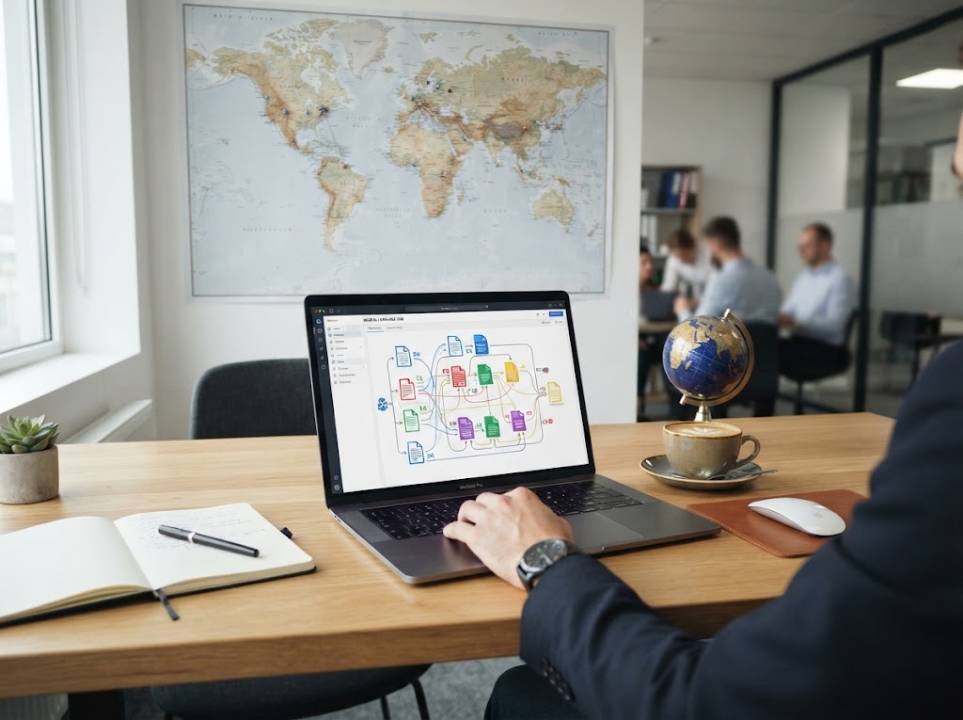
A company selling into five countries used to mean five separate folders, five freelance translators, and five chances for a product description to drift from the original meaning. That chaos is quietly disappearing as language teams adopt shared systems instead of email chains and scattered spreadsheets.
Why consistency became the real challenge
Speed was never the hardest part of going global. The harder problem was making sure a warranty clause translated for Germany said exactly the same thing as the one translated for Poland six months later. Small inconsistencies compound across product lines, support articles, and legal disclaimers until nobody can say with confidence which version is current.
Language teams that once relied on individual translators working from memory are now standardizing terminology across every market at once. A single approved phrase gets locked in centrally, so the next translator working on a related document sees exactly how a term was rendered last time instead of guessing.
The software behind the shift
Much of this consistency now comes from a proper translation management system, which keeps glossaries, translation memory, and workflow approvals in one place rather than scattered across inboxes. Teams no longer need to chase down the last version of a file by email, since the platform tracks who changed what and when.
This matters most for companies juggling dozens of product variants across regions. When a specification sheet updates in English, the system flags every translated version that now needs a matching update, instead of leaving outdated copies live on regional websites for months.
When official documents enter the picture
Marketing copy can tolerate a little inconsistency. Legal and government paperwork cannot. Businesses expanding into the United States, immigration applicants, and organizations submitting paperwork to foreign authorities regularly need certified translation services where a signed statement of accuracy accompanies the translated document itself.
That requirement trips up teams who assume any bilingual staff member can handle the job. Certified work follows specific formatting and attestation rules that vary by receiving authority, and getting it wrong means resubmitting weeks later. Companies that plan for this early avoid the scramble that comes with a rejected filing.
A market that keeps growing
Portuguese-speaking markets illustrate the stakes well. Brazil alone represents one of the largest e-commerce and manufacturing economies translating extensive documentation every year, while Portugal and Portuguese-speaking African nations add further demand. Businesses entering these markets increasingly turn to dedicated Portuguese translation services rather than treating the language as an afterthought handled alongside Spanish.
The distinction matters more than casual observers assume. Brazilian Portuguese and European Portuguese differ enough in vocabulary and tone that a document translated for Lisbon can read oddly in São Paulo, and vice versa. Companies that respect this difference see measurably better engagement from local audiences.
What teams get wrong early on
New exporters often underestimate how much translation workflow depends on process rather than talent alone. A brilliant translator working without shared terminology still produces inconsistent output across a hundred documents. The fix is rarely hiring better linguists. It usually means adopting shared reference material and a system that enforces it automatically.
According to the American Translators Association, the demand for professional language services has grown steadily as global commerce expands, with businesses of every size now needing structured translation workflows rather than ad hoc solutions.
Where this is heading
The direction is clear enough. Companies that once treated translation as a final step before launch are moving it earlier into product development, building multilingual content alongside the original rather than after it ships. That shift alone eliminates much of the inconsistency that plagued global teams for years, and it turns what used to be a scramble into a repeatable process anyone on the team can follow.